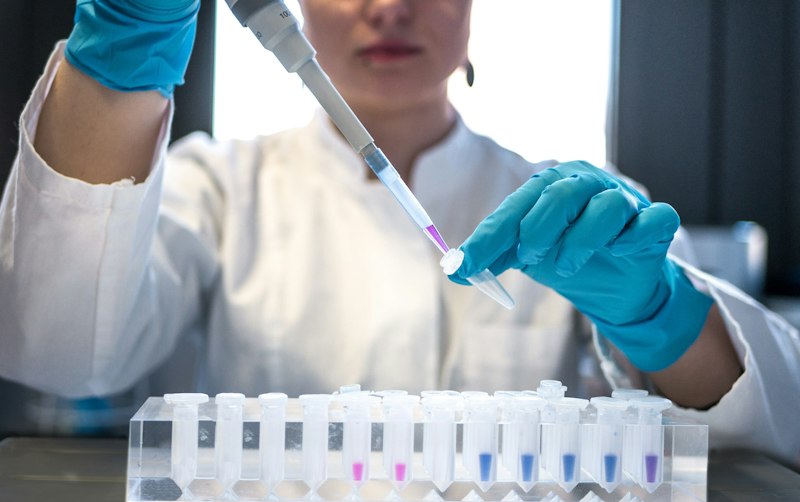
In a landmark achievement for genetic research in India, scientists at the Centre for Cellular and Molecular Biology (CCMB) in Hyderabad have successfully used CRISPR-Cas9 technology to correct a specific genetic mutation responsible for a rare form of muscular dystrophy. This marks the first time such a precise and efficient gene editing feat has been accomplished on human cells within the country, offering renewed hope for treating inherited diseases.
The team, led by Dr. Anjana Kumar, targeted the dystrophin gene, which, when mutated, causes Duchenne muscular dystrophy (DMD). DMD is a debilitating condition primarily affecting young boys, leading to progressive muscle weakness and premature death. While therapies exist to manage the symptoms, a definitive cure has remained elusive. This new research, published this week in the journal 'Gene Therapy Advances', offers a potential pathway towards such a cure.
CRISPR-Cas9: A Molecular Scalpel for Genetic Diseases
CRISPR-Cas9, often described as a “molecular scalpel,” is a revolutionary gene-editing technology that allows scientists to precisely target and modify specific DNA sequences within a cell. Think of it like finding a typo in a massive book (the human genome) and being able to correct it with pinpoint accuracy. The Cas9 protein acts as the “scissors,” cutting the DNA at the desired location, while a guide RNA directs the Cas9 to the exact spot needing correction. The cell’s own repair mechanisms then kick in to fix the break, ideally incorporating the corrected gene sequence. This technology has been making headlines worldwide, but this is the first time an Indian team has demonstrated such efficiency in correcting a disease-causing mutation in human cells in vitro.
“We focused on a specific mutation common in Indian DMD patients,” Dr. Kumar told News Reporter Live. “Our experiments showed that we could correct the mutation with remarkable precision, restoring the production of functional dystrophin protein in the affected muscle cells.” The team used patient-derived muscle cells grown in the lab to conduct their experiments.
Real-World Applications and Future Directions of Genetic Research
While this research is still in its early stages, the implications are profound. The successful correction of the DMD-causing mutation in vitro provides a strong foundation for developing gene therapies that could potentially cure the disease. The next step, reportersays, involves testing the safety and efficacy of the gene-editing approach in animal models, followed by clinical trials in human patients. The researchers are also exploring the possibility of using similar CRISPR-based approaches to treat other genetic disorders prevalent in the Indian population, such as thalassemia and sickle cell anemia. This is a particularly exciting prospect, given the existing infrastructure in India for managing these conditions. Imagine a future where these debilitating diseases could be eradicated with a single gene-editing treatment.
This breakthrough also highlights the growing capabilities of Indian scientific institutions like CCMB. Just as ISRO has propelled India to the forefront of space exploration, and DRDO is advancing defense technologies, institutions like CCMB are positioning India as a leader in biomedical research. The collaborative spirit fostered by the Council of Scientific and Industrial Research (CSIR), of which CCMB is a part, is crucial for driving such innovations.
Dr. Rajesh Sharma, a leading geneticist at IIT Delhi, who was not involved in the study, commented, “This is a significant step forward for gene therapy research in India. The CCMB team has demonstrated a high level of expertise in applying CRISPR technology to tackle a challenging genetic disease. It underscores the importance of investing in cutting-edge research infrastructure and nurturing talent in our scientific institutions.” Meanwhile, the team at CCMB is already working on improving the efficiency and specificity of their gene-editing approach. They are also investigating ways to deliver the CRISPR-Cas9 system more effectively to the affected muscle tissues in vivo. This includes exploring the use of viral vectors or nanoparticles to transport the gene-editing machinery.
Explore More on News Reporter Live
Frequently Asked Questions
What does this genetic editing discovery mean for patients with muscular dystrophy?
This discovery offers hope for a potential cure for Duchenne muscular dystrophy (DMD). While still in early stages, the successful correction of the genetic mutation in lab-grown cells suggests that gene therapy using CRISPR-Cas9 could one day be used to treat or even cure DMD in patients. This would significantly improve the quality of life and lifespan of those affected by this debilitating disease.
How was the genetic research conducted by the Indian scientists?
Scientists at CCMB in Hyderabad used CRISPR-Cas9 technology to target and correct a specific mutation in the dystrophin gene, which causes DMD. They used patient-derived muscle cells grown in the lab and demonstrated that their gene-editing approach could restore the production of functional dystrophin protein. This proves the efficiency and precision of their method in vitro.
What are the practical applications of this genetic research breakthrough?
The most immediate practical application is the development of gene therapies for DMD. Further down the line, the techniques and knowledge gained from this research could be applied to treat other genetic disorders. This breakthrough also positions India as a leader in gene editing research and development, encouraging further investment and innovation in the field.